International Flight Attendant Day: A Tribute from a Retired Pilot
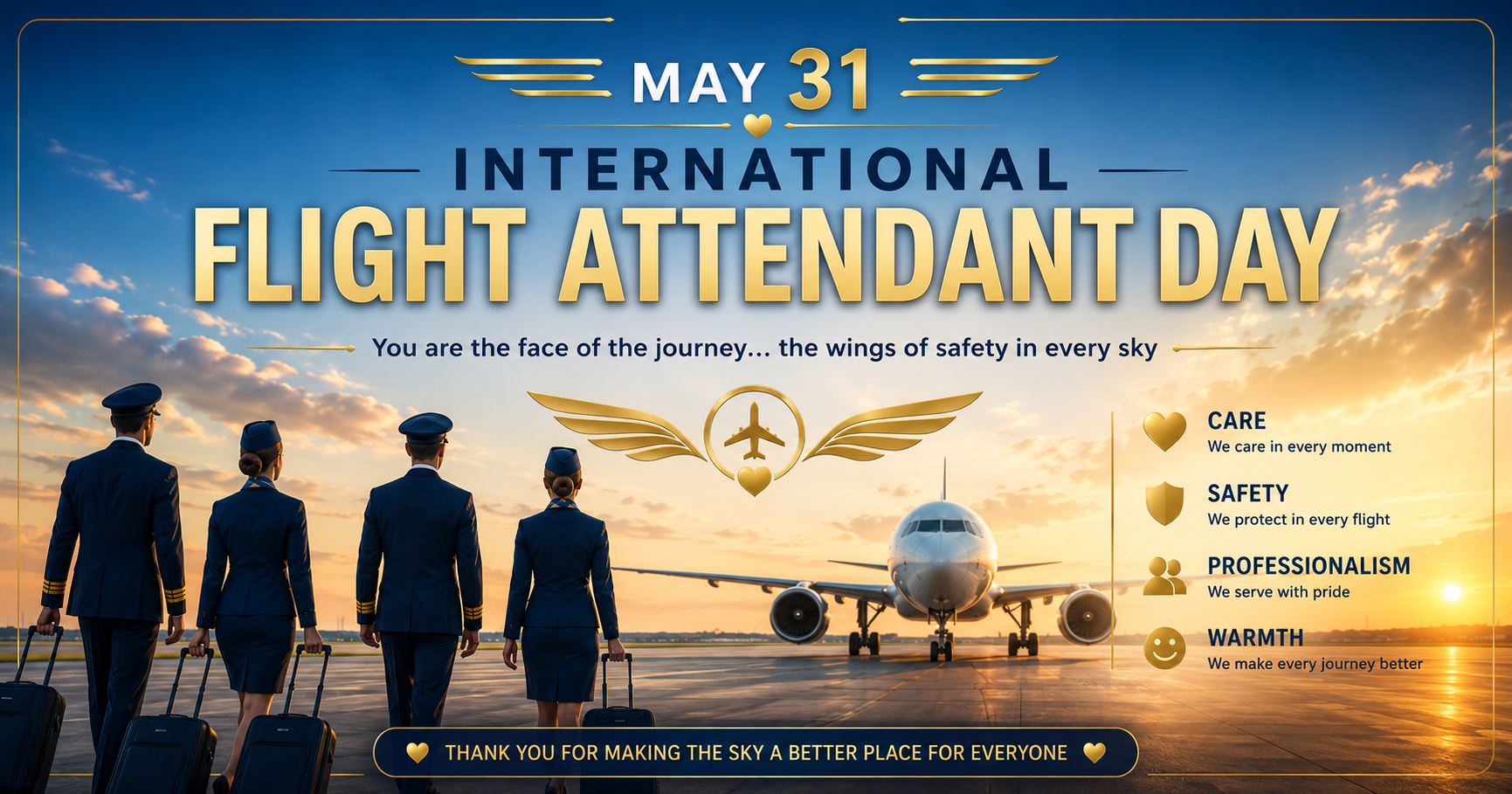
Every year on May 31, the world recognizes International Flight Attendant Day, a day dedicated to honoring the men and women who do far more than walk the narrow aisles of aircraft. They are companions of the journey, partners in responsibility, and guardians of reassurance in a sky that tests both skill and humanity.
As a retired pilot who spent more than forty years between the earth and the sky, I cannot let this occasion pass without offering my deepest gratitude and respect to every flight attendant who shared our flights. They were never simply “service crew,” as some may think. They were, and remain, the quiet backbone of every safe, dignified, and successful journey.
In aviation, attention often turns naturally toward the cockpit. People see the captain’s uniform, the flight deck, the instruments, the sound of takeoff, and the precision of landing. But those who have spent a lifetime in the sky understand a deeper truth: a flight is never completed from the front alone. The aircraft may be flown from the cockpit, but the passengers are reassured in the cabin. There, among the travelers, another face of responsibility comes alive.
Cabin crew members have always been a true source of support for pilots. They were our eyes in the cabin, an extension of our responsibility, the voice of calm when situations became uncertain, and the hands of care when passengers needed help. They were the smile that eased a child’s fear, the steady words that restored confidence to an anxious traveler, and the watchful presence that sensed concern before others even noticed it.
A passenger may think a flight attendant’s role begins with a welcome and ends with a meal or a glass of water. But every pilot knows the deeper truth. A flight attendant is not simply a pleasant face on board. A flight attendant is a trained safety professional, prepared for emergencies, disciplined under pressure, and capable of caring for people in moments of fear, weakness, or uncertainty.
The relationship between pilots and cabin crew is not always written in words, but it is deeply understood through professional silence. It is a relationship built on trust. We in the cockpit depend on them, just as they depend on us. Between us exists an invisible bridge of respect, discipline, and shared responsibility. Doors and procedures may separate the cockpit from the cabin, but one mission unites us: to bring every flight safely to its destination while keeping the human being at the heart of that mission.
Aviation is not only a mechanical science. It is not merely about speed, altitude, direction, and fuel calculations. Aviation is also a philosophy of trust. When passengers step onto an airplane, they place their lives in the hands of people whose names they may never know. They trust the pilots in the cockpit, and they trust the flight attendants around them. That trust is not a small matter. It is a sacred responsibility carried by the entire crew.
This is where the greatness of the flight attendant’s role becomes clear. They are expected to remain calm when others are unsettled, to smile despite fatigue, to stay alert through long hours, to be firm without being harsh, and to be kind without appearing weak. This profession is not built on appearance alone. It requires emotional intelligence, endurance, quick judgment, compassion, and the ability to serve people while preserving the dignity and authority of the role.
After more than forty years in aviation, my memory is not filled only with the names of airports, aircraft, routes, and flight schedules. It is also filled with the faces of the men and women of the cabin crew who shared with us the journey, the pressure, the fatigue, the success, and the quiet joy that follows every safe landing. I remember many moments when the cabin crew acted with wisdom and professionalism, reminding us that an aircraft is not only metal and engines. It is a temporary family carrying lives, dreams, and stories through the sky.
The pilot and the cabin crew are two wings of the same meaning. The pilot speaks the language of instruments, altitude, navigation, and control. The cabin crew speaks the language of people, reassurance, care, and calm. When these two languages come together, a flight becomes more than transportation from one city to another. It becomes an act of trust between heaven and earth.
On this day, I say to every flight attendant: perhaps we did not say thank you often enough. Perhaps flight schedules, delays, deadlines, and the fatigue of travel kept us from expressing what we always knew in our hearts. But every true pilot understands that behind every successful flight stood a cabin crew working quietly, completing the mission with dignity, courage, and professionalism.
You were never behind us.
You were always beside us.
And in some of the most difficult moments, you were the quiet strength that held the entire flight together.
On International Flight Attendant Day, I extend my deepest respect and gratitude to the guardians of the cabin, the ambassadors of the sky, and the unforgettable partners who made aviation more human, and every journey safer, warmer, and more reassuring.